
Medical Equipment Suppliers vs Manufacturers: Complete Buyer’s Guide
Medical Equipment Suppliers vs Manufacturers: Complete Buyer’s Guide
Whether you are buying medical equipment for a multi-specialty hospital network, a private clinic, or your grandmother’s palliative care, the process is not as simple as one may think. There is a long list of requirements, approvals, and specifications to meet, and time is of the essence. To get an adequate idea of who does what, one should understand the difference between medical equipment suppliers and manufacturers.
These two types of organizations play different roles in the supply chain, and contacting the wrong one may result in significantly increased costs, delivery delays, or lack of support services. This article aims to provide a clear understanding of how medical equipment suppliers and manufacturers operate, interact with each other, and which one is better suited for your organization.
Understanding Medical Equipment Suppliers
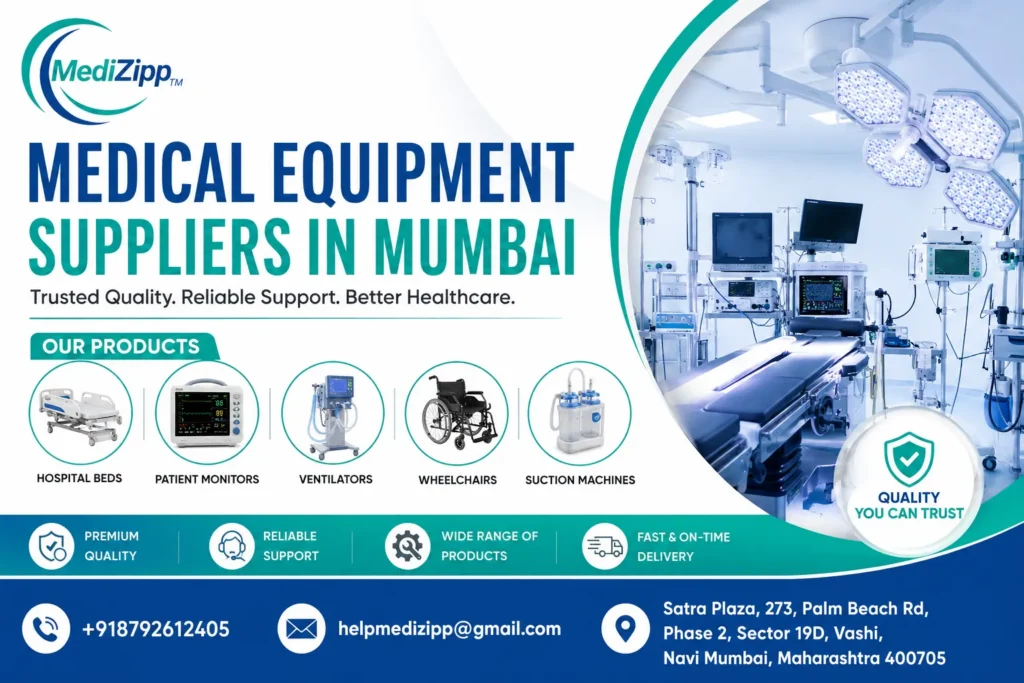
A medical equipment supplier (often operating as a distributor, regional vendor, or aggregator) acts as the vital link between device producers and point-of-care environments. Rather than manufacturing physical hardware, suppliers focus on logistics, product variety, regional regulatory compliance, and localized customer service.
Key Benefits of Using Supplier
Many years of experience in the business and working with local companies allow Medical Services to offer high-quality equipment and competitive prices. Our main advantage is the ability to provide different categories of medical technologies, from simple devices to full-scale ICU equipment. Our benefits include
the ability to organize the purchase of medical equipment of various categories and brands,
rental of medical technology on a long-term and short-term basis
rapid delivery of equipment to the client
installation and commissioning of medical devices by professional medical technologists.
All this allows you to benefit from years of experience and knowledge of Medical Services in the field of medical technology. We offer our clients to rent medical devices such as anesthesia machines. You will also be able to purchase modern equipment at competitive prices.
The Role of Medical Equipment Manufacturers
Types of suppliers Description
Operating as a premier hospital equipment distributor, Medizipp deals in high volumes of hospital equipment, including surgical supplies, imaging systems, and specialized care devices. They supply a wide range of certified medical equipment to healthcare networks, surgical centers, and large medical facilities.
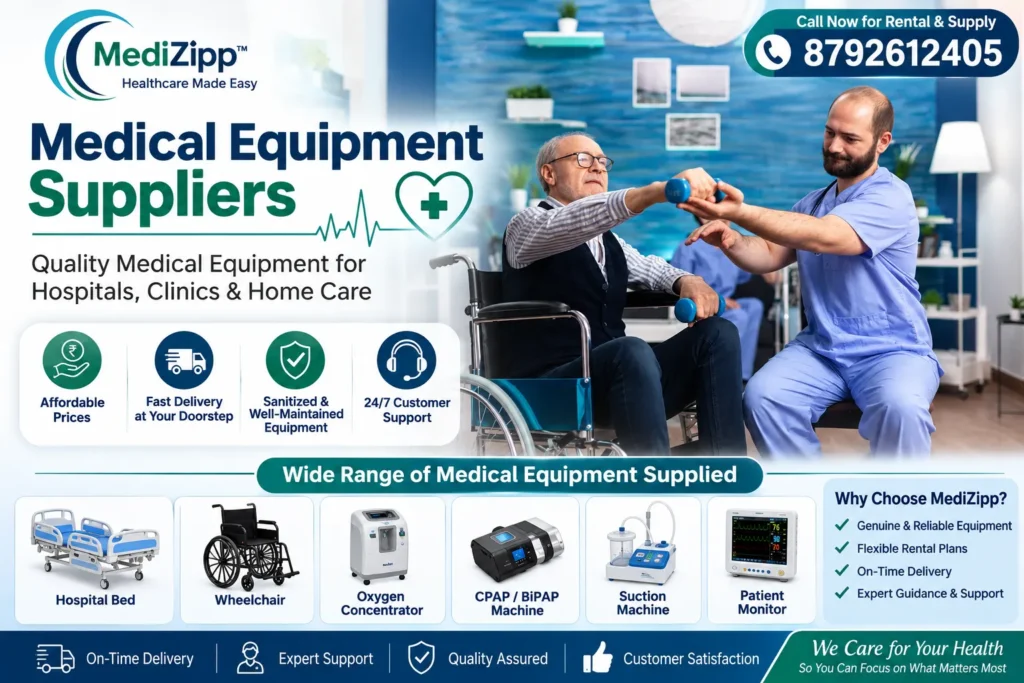
Home healthcare suppliers Provide medical equipment to customers in their homes. Some examples of such organizations are companies manufacturing and supplying CPAP or BiPAP machines and accessories, medical suppliers of wheelchairs, hospital beds, and other equipment needed at home. They specialize in medical equipment for home healthcare.
Specialized suppliers Deal in medical equipment that falls under specific categories, such as MRI equipment, or other types of equipment, or surgical robots, or specialized devices for eye care. Such suppliers can also be referred to as niche distributors.
How Manufacturers Coordinate with Distributors
Not all manufacturers have their own national or even regional fleets of field-service technicians. To cover the country and serve hospitals, most manufacturers rely on a network of certified hospital equipment distributors. Distributors carry out key activities such as field sales and service and delivery of products, leaving the manufacturers to focus on other priorities, such as R&D.
Direct Sourcing Comparison: Supplier vs. Manufacturer
Determining whether to buy direct from the factory floor or work through a regional distributor depends on your order volume, capital budget, and required maintenance support.
| Sourcing Attribute | Medical Equipment Manufacturer | Regional Medical Equipment Supplier |
| Best Used For | Bulk hospital construction, OEM customization | Daily clinic needs, rapid replacements, home care |
| Product Selection | Single-brand proprietary lines | Multi-brand catalog under one roof |
| Procurement Options | Capital purchase or factory lease only | Outright purchase, lease, or short-term rental |
| Minimum Order Quantity | High MOQs typical for direct contracts | Flexible (single items to bulk orders) |
| Lead Times | Weeks to months (production + international freight) | Days to hours (local warehouse stock) |
| Post-Sale Support | Factory warranty, remote engineering desk | On-site installation, local repair teams, loaner units |
How to Evaluate and Choose the Right Sourcing Partner
Whether you are looking for a regional distributor or dealing directly with device manufacturers, make sure to ask these critical questions:
1. Verify if all the devices are certified according to the ISO 13485 standard and have passed the necessary regulatory inspections (FDA, CE approvals, or other relevant certifications).
2. In addition to warranty claims, clarify if the seller offers an Annual Maintenance Contract (AMC) or Comprehensive Maintenance Contract (CMC) and what response time is provided for equipment repair within the AMC/CMC framework.
3. If you are interested in renting home care medical devices or buying used machines, make sure to understand the sanitation policies the seller is following during the sterilization process between different patients.
4. When purchasing medical equipment, ask the supplier if they have a supply chain policy regarding the availability of critical spares in the local warehouse.
5. Key Trends Reshaping Medical Supply Chains
With the global medical device market exceeding $600 billion, technological advancements and changing care models are rapidly transforming procurement:
Frequently Asked Questions (FAQ)
Is it cheaper to buy from medical equipment manufacturer
Buying medical equipment from manufacturer may allow getting a lower unit price, however, only in case of larger quantities. For smaller batches and single purchases, manufacturers usually apply High Minimum Order Quantity (MOQ) policy or recommend contacting local distributors. It is also necessary to organize the delivery of the equipment, its installation, and maintenance.
Decide whether it is better for the patient to rent or buy medical equipment.
1) Rent medical equipment when the patient has a short-term need for it, for example, after surgery or during a course of respiratory therapy. This would avoid having to spend a lot of money on something they will only need for a brief period of time.
2) Buy medical equipment when the patient will be needing it on a long-term basis, such as if someone requires a mobility aid permanently or needs a PAP machine to sleep at night.
Can I rent equipment directly from manufacturers?
In most cases, no Medical equipment manufacturers function as producers and suppliers of bulk medical equipment. Medical equipment rental services are provided regionally by medical equipment suppliers and aggregators that have the infrastructure to deliver, install, and pick up equipment of various levels of complexity in a sterile manner and inside the patient’s home environment. What is the difference between an AMC and a CMC in medical equipment maintenance?
- AMC (Annual Maintenance Contract): Covers routine labor, periodic inspections, and servicing, but requires you to pay extra for replacement spare parts.
- CMC (Comprehensive Maintenance Contract): Covers both technician labor and the cost of replacing worn or damaged mechanical/electronic spare parts.
Conclusion
The ability to navigate the healthcare industry and purchase medical equipment depends on many considerations regarding the company’s scale and needs. Medical equipment manufacturers prioritize innovation, quality, and functionality at the level of medical devices. However, medical equipment suppliers play an essential role, as they bring modern devices closer to the end-users while providing services such as installation, repairs, rentals, and more. Understanding the organization’s requirements, including the scope of the purchase, delivery timing, and needed additional services, will allow the company to create efficient sourcing strategies, remain competitive, and reduce costs.
Need certified medical equipment for your facility or home care setup?
Explore our full catalog of clinical gear, or contact an equipment specialist today to find the right purchase or rental plan for your needs.
