
Elder Care at Home: Nursing Services that Enhance the Lives of Seniors.
Older people’s care and everyday care needs may change. Most elders would not prefer to reside in a hospital or care home. That’s why in-elder care at home can be a valuable choice for families that wish to offer their loved ones comfort, safety, and personalized support.
The health care workers can help the elderly manage their health issues, get back to their health after hospitalization and maintain their daily activities. Seniors require the proper care, but they need to be comfortable in their own home as well. This requires the medical support, trained caregivers and family care.
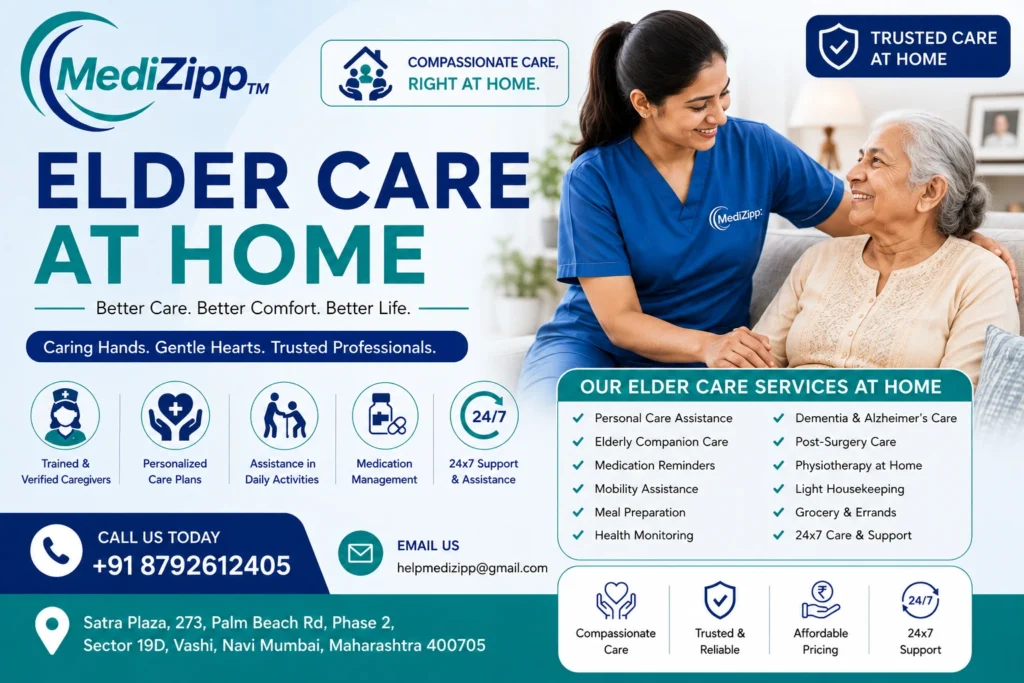
Elder Care at Home, What is it?
The kind of care provided at home is referred to as At Home Elder Care and is an assortment of services that allow older adults to remain living in their own homes. Support can be given with activities of daily living, personal hygiene, mobility, reminding to take medication, meal preparation and companionship.
Depending on the state of health and independence of the elderly, a family member or trained care attendant or registered nurse can provide home care.
A major advantage of providing home care for an elderly person is that it can be customised to meet the individual’s needs. Families have a choice of occasional help, daily help or a professional medical service if needed.
The reasons for the importance of Elder Care at Home?
As people get older there are challenges that may arise, including reduced mobility, chronic health conditions, and struggles with daily living. A good support service will help seniors to stay independent and retain their dignity.
Here are some of the advantages of home care.
1.Safe and familiar environment.
Staying home allows seniors to be with others, items and routines that are familiar to them. A comfortable setting also can assist family members to be more involved in the care of their loved one.
2. Personalized Attention
All seniors have individual physical, emotional and medical requirements. Home care enables families and/or carers to create a care plan that suits the person’s condition and preference, and fits their lifestyle.
3. Support for daily living skills
Some of the older person’s bathing, dressing, eating, walking and daily functions require help. You can provide the correct care without infringing on the person’s privacy or depriving him/her of independence by a trained caregiver.
4.Support for family caregivers is provided.
Carrying out care for an aged family member can be demanding and exhausting both physically and emotionally. Families can use professional assistance to help with the care giving responsibilities and to carry out their responsibilities at work and in their personal lives.
What Nursing Services Do for Elderly People?
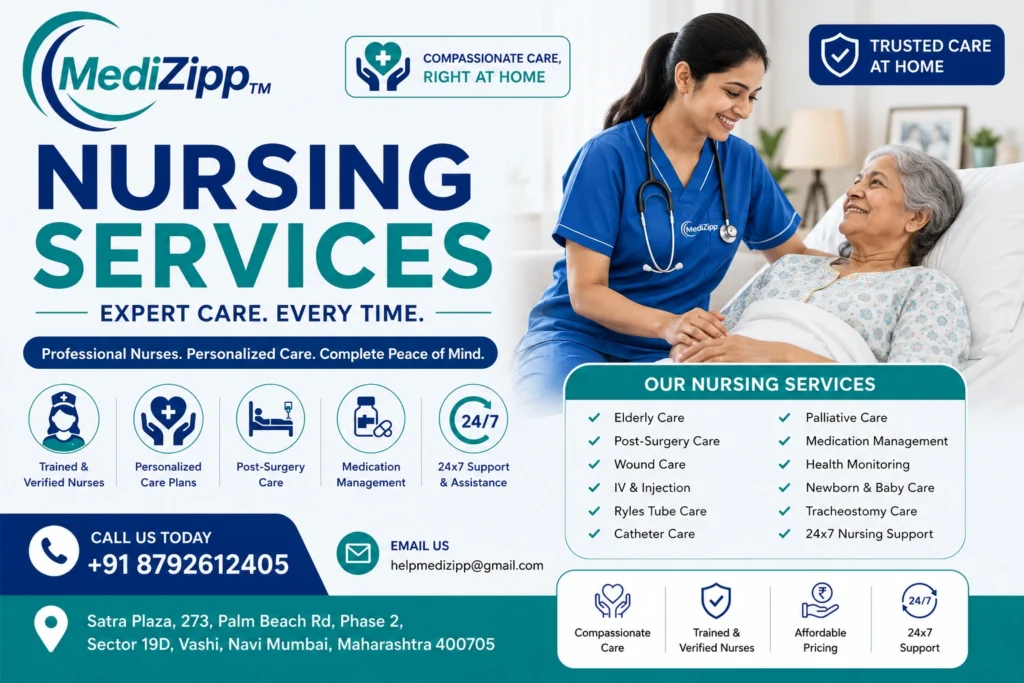
Professional nursing services include medical and health assistance as well as health monitoring according to the needs of a patient and the recommendation of a qualified healthcare professional.
Nursing is a clinical activity, which cannot be delegated to any member of the community, but must be done by someone who is appropriately qualified and authorised in the nursing profession.
Common home nursing care can be utilised for:
- Monitoring vital signs, as clinically appropriate.
- Helping with wound care and changing of dressings.
- Supporting the giving of prescribed medicines.
- After surgery nursing.
- Assisting recovery outside hospital.
- Assisting with the care plan of chronic conditions.
- Providing education about recommended care routines to family members.
Services may be available, depending on the provider, the nurse’s skills and the patient’s condition.
Before seeking nursing care at home for the patient, families should consult with a competent health care provider regarding their medical requirements.
The difference between Elder Care and Nursing Services?
These services can be utilized together, however serve various objectives.
Primary focus of elder care is with activities of daily living, providing companionship, personal care, mobility and maintaining a safe home environment.
Nursing services are focused on the clinical care, health monitoring and medical procedures within the scope of the nursing profession.
If a senior living independently needs assistance with feeding and with living activities, for example, a caregiver can assist. A qualified nurse may be necessary to care for the wound and/or clinical needs of a surgically recovered senior.
A few people might require both services. Understanding their needs can inform families of the appropriate mix of supports.
When it comes to choosing elder care at home there are several essential tips that you should keep in mind.
Choosing an appropriate care worker is an important choice.
Caregivers and/or professional nursing should be carefully considered for the family before they are engaged.
Check Qualifications and Experience
Verify the experience of the caregiver and check the nurse’s registration, qualifications and relevant clinical skills (if applicable).
Know about the services offered.Be familiar with the services offered.
Ask questions of the provider about services offered including personal care, mobility, posthospitalization and clinical nursing services. Provide services when necessary according to senior’s needs.
Explain the concept of costs and scheduling.
Check on fees, hours of operation, emergency policies, and any other costs. Be aware of the services available for a few hours, overnight or 24 hours.
Always focus on Safety and Communication.
Inquire about staff verification, supervision, incident reporting and communication with families. Families need to be provided with information and to discuss their concerns.
Review Care Plan regularly
It is important to be mindful that older people’s needs change over time. The care provided and support plan will be appropriate and maintained if discussed regularly with the care provider and the treating health care professional.
How to make your home a safer place for seniors.
One of the key components of good elder care is providing a safe living environment. Making small adjustments can help minimize common household hazards, as well as make daily tasks easier.
Install grab bars in bathrooms, enhance lighting, eliminate slippery rugs, place things within easy reach and keep walkways clear.
Where appropriate, appropriate medical equipment (e.g., wheelchairs, walking aids, hospital beds) can aid in mobility and comfort. Equipment should be chosen based on the person’s needs and, if required, with the assistance of a suitable health care professional.
Families must also have emergency contact information easily accessible and adhere to any medication or follow up instructions.
It is possible to think about professional nursing services when?
Medizipp can be a starting point for exploring home medical equipment and care-related solutions that may support elderly people at home.
If an elderly person requires clinical monitoring, wound care, post-operative help and assistance after a hospital discharge plan, professional nursing support may be appropriate.
It also can help if family members are not able to safely do certain care activities.
If confusion happens suddenly, breathing becomes very difficult, chest pain is present, loss of consciousness occurs or other serious symptoms develop, however, assessing the situation in a home environment is not the best place to get a diagnosis, so immediate medical attention is needed.
Conclusion
As they get older, older adults can be kept comfortable, dignified and can enjoy a quality of life with the help of care. Elder care at home is more personal and conducted in a familiar setting, while professional nursing services are medical services that have to be provided.
By considering a family member’s needs, asking questions about providers’ qualifications, making families’ homes safer, and maintaining ongoing communication with healthcare providers, families can make informed decisions about how to care for a family member.
If you’re considering home-care for an older family member, then Medizipp is a place to get a head start on home medical equipment and solutions to home health. Determine appropriate support for the senior depending on his/her needs; and bring in qualified health care professionals when medical advice is needed.
Frequently Asked Questions
1. What does elder care at home include?
Depending on the needs of the person, this may include assistance with activities of daily living, personal care, feeding, walking, socialization and/or arranging with medical personnel if needed.
2. What nursing services are available at home?
Depending on the provider and clinical needs, home nursing may include monitoring of vital signs, wound care, medication administration – if prescribed – and post-operative care.
3. Is elder care at home suitable for seniors living alone?
It might be appropriate if the needs of the senior can be safely provided for in an appropriate care plan. It may be helpful to consult with a professional to determine the level of supervision that is required.
4. How do I choose the right home nursing provider?
Look at the qualifications, experience, availability of service, fees, staff verification and communication systems before choosing.
5. Can medical equipment improve elderly care at home?
Yes. When used appropriately, equipment such as hospital beds and mobility items can help enhance the level of comfort and access for the individual, based on their needs and their professional advice.
